Back to Dog Grooming Tips & Advice
Why De-Shedding Is Essential for Double-Coated Breeds
Double-coated dogs need professional de-shedding — not shaving. Learn which breeds benefit most, what the process involves, and why it matters for coat health.
Double-coated breeds naturally shed seasonally, but unmanaged shedding can lead to matting, overheating, and skin problems. If you have ever found tumbleweeds of fur drifting across your floor, you already know how much hair these breeds can lose — and home brushing alone often cannot keep up.
Professional de-shedding removes the loose undercoat safely and efficiently, improving airflow to the skin without damaging the protective topcoat. Here is what every double-coated dog owner should know.
Which breeds need de-shedding?
Any breed with a dense undercoat beneath a longer outer coat benefits from professional de-shedding. Common double-coated breeds we groom across Glasgow and Renfrewshire include:
- Huskies and Malamutes
- German Shepherds
- Golden Retrievers and Labradors
- Border Collies
- Pomeranians and Samoyeds
- Corgis and Shetland Sheepdogs
What does a de-shedding treatment involve?
A professional de-shed is more thorough than home brushing. The process typically includes:
- A warm bath with a de-shedding shampoo to loosen the undercoat.
- High-velocity drying to blow out loose fur from deep within the coat.
- Professional de-shedding tools and undercoat rakes to remove remaining dead hair.
- A final brush-through to ensure the coat sits naturally and airflow is restored.
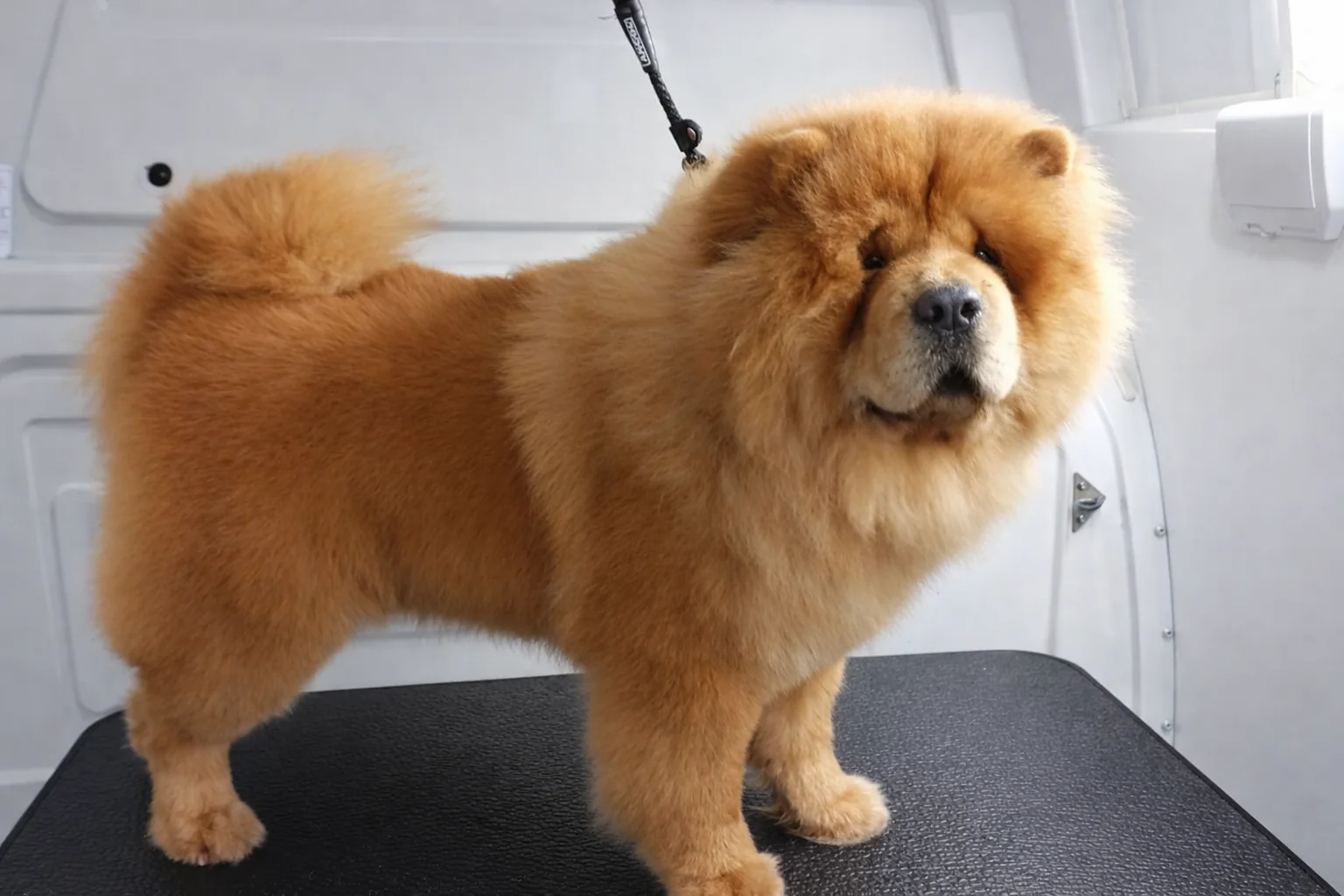
The difference is often dramatic — owners are amazed by how much loose coat comes out in a single session. This is available as an add-on to our Bath & Brush or Full Groom services. Breed-specific advice is in our Chow Chow and Pomeranian grooming guides.
Home brushing vs professional de-shedding
Regular home brushing is important between appointments — it helps manage surface shedding and prevents tangles. However, standard pet brushes cannot reach the dense undercoat layers that professional tools can. A professional de-shed every six to ten weeks, combined with regular home brushing, gives the best results for coat health and household fur management.
Why you should never shave a double coat
Shaving a double-coated breed removes their natural insulation system. The undercoat and topcoat work together to regulate temperature — keeping them warm in winter and cool in summer. Shaving can lead to sunburn, altered coat texture on regrowth, and even increased overheating risk. De-shedding is the safe alternative. For more on summer coat care, read our guide on summer grooming safety tips.
FAQs
Helpful pages: