Back to Dog Grooming Tips & Advice
The Hidden Health Risks of Matted Fur
Matted fur traps moisture and bacteria against your dog's skin, causing pain and infection. Learn how to spot matting early and prevent it with regular grooming.
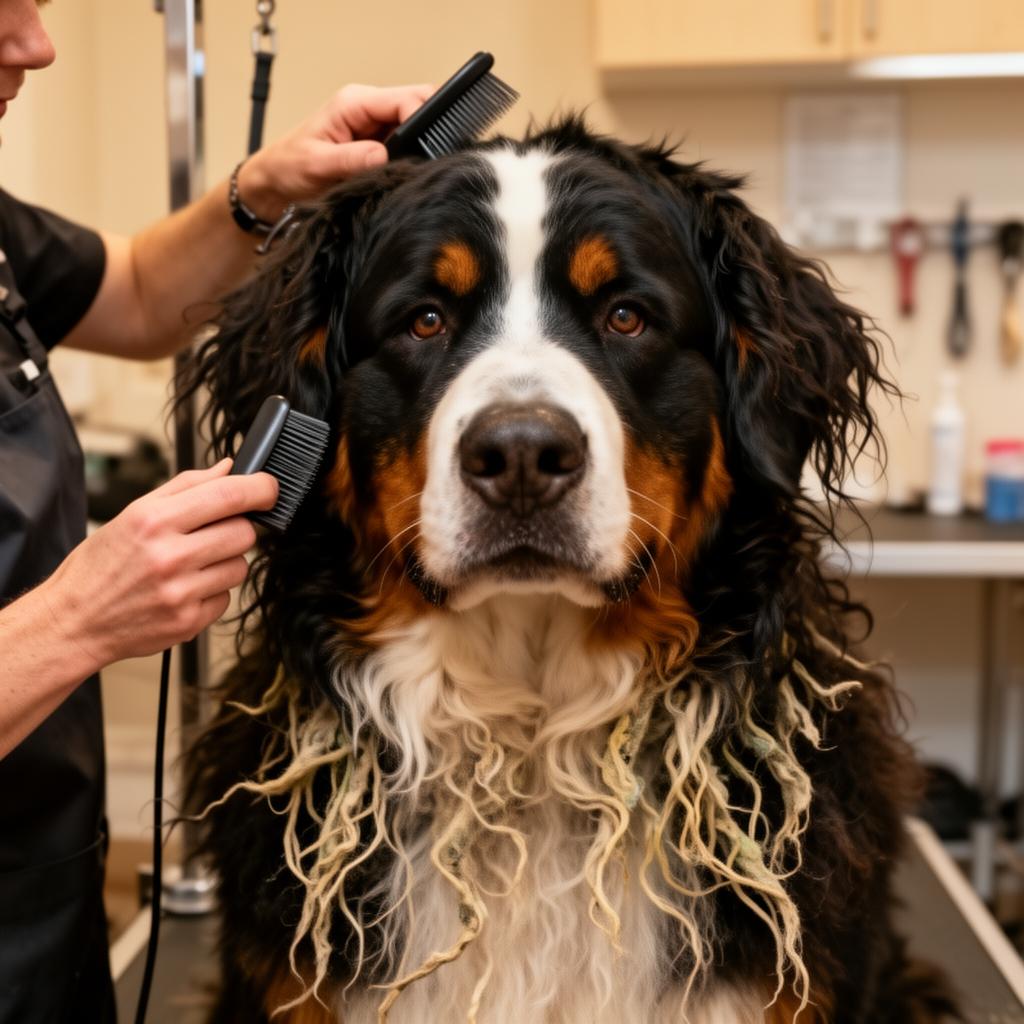
Matted fur is more than a cosmetic problem — it can become a serious welfare issue if left untreated. Mats form when loose hair tangles tightly against the skin, restricting airflow and trapping moisture. What starts as a small knot behind the ear can quickly become a painful, tight mass that is impossible to brush out at home.
Understanding why matting happens, which breeds are most at risk, and how to prevent it will help keep your dog comfortable and healthy between grooming appointments.
What causes matting?
Mats form when dead hair is not removed through regular brushing or grooming. Common causes include:
- Infrequent brushing — especially in areas with friction (behind ears, under legs, around the collar).
- Moisture from rain, swimming, or baths that is not fully dried out.
- Harnesses and collars that rub against the coat daily.
- Seasonal coat changes, where new growth tangles with old shedding coat.
Why matted fur is a health risk
As mats tighten, they pull on the skin every time a dog moves. This constant tension can cause discomfort, bruising, and even sores hidden beneath the coat. Moisture trapped beneath mats creates the perfect environment for bacteria and fungal infections to develop without the owner ever noticing.
In severe cases, matting can restrict blood flow to the skin and hide parasites like fleas or ticks. Dogs with heavily matted coats often need to be shaved down completely — which is stressful and can leave the skin vulnerable afterwards.
The kindest fix is prevention: a regular Full Groom keeps curly and long coats mat-free, and our coat care add-ons help when a coat needs extra attention. Owners of Cockapoos and Shih Tzus will find breed-specific advice on our breed pages.
Which breeds are most at risk?
Any breed with a curly, wavy, or long coat is more prone to matting. In our experience across Glasgow and Renfrewshire, the breeds we see most often with matting issues include:
- Cockapoos, Cavapoos, and other Poodle crosses
- Shih Tzus and Lhasa Apsos
- Bichon Frisés
- Spaniels (especially behind the ears)
- Golden Retrievers and other feathered breeds
How to prevent matting
The best defence against matting is a combination of regular home brushing and consistent professional grooming. We recommend:
- ✓ Brush your dog at least two to three times per week, focusing on friction areas.
- ✓ Book a professional groom every four to six weeks for curly and long coats.
- ✓ Dry your dog thoroughly after walks in the rain or swimming.
- ✓ Remove harnesses and collars at home to let the coat breathe.
- ✓ Use a slicker brush and comb rather than a bristle brush for longer coats.
If you are unsure how often your dog should be groomed based on their coat type, our guide on grooming frequency by coat type breaks it down.
FAQs
Helpful pages: