Back to Dog Grooming Tips & Advice
Puppy Coat to Adult Coat: When Your Dog's Grooming Needs Change
Your puppy's coat changes as they grow — often around 8 to 12 months. Learn what to expect during the coat change and how grooming needs shift with it.
If your once easy-to-brush puppy has suddenly started matting overnight, you are almost certainly in the middle of the coat change. Somewhere between around eight and twelve months, most dogs swap their soft puppy coat for their adult one — and it catches a lot of owners by surprise.
Here is what actually happens during the coat change, why it is the highest-risk period for matting, and how your dog's grooming needs shift as they grow up.
What is the puppy coat?
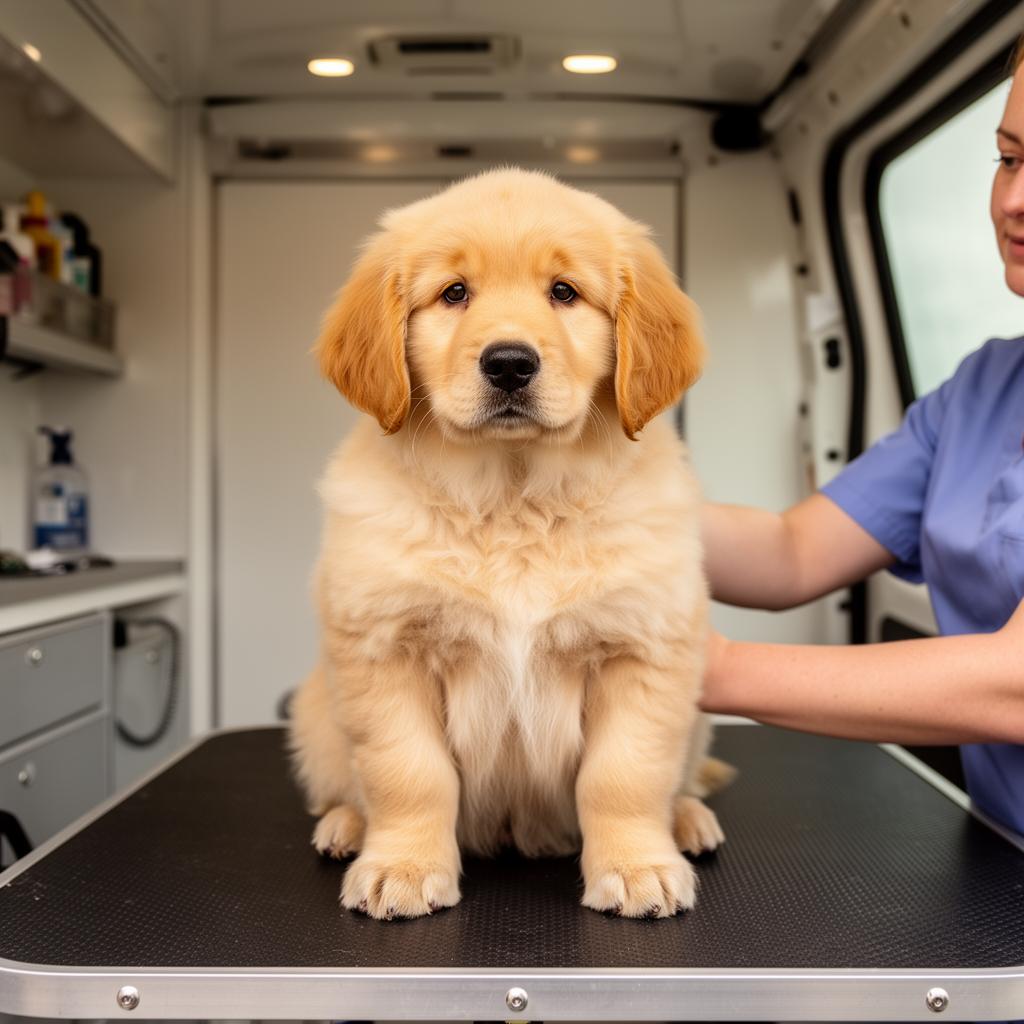
Puppies are born with a soft, fine, fluffy coat. It is lovely to touch, easy to brush, and far more forgiving than what comes next — which is exactly why so many owners of curly-coated breeds get a shock later. The puppy coat is a single, light layer without the density or texture of the adult coat.
When does the coat change happen?
For most breeds the change happens somewhere between eight and twelve months, though it varies — some breeds start earlier, larger breeds often later, and the transition can take several months rather than happening overnight. During it, the old puppy coat sheds out while the adult coat grows in, and the two get tangled together. That combination is what makes this period so matting-prone.
Why the coat change is peak matting season
This is the single most important thing to know: during the coat change, dogs mat faster than at any other point in their lives. The shedding puppy coat gets trapped in the incoming adult coat, forming tangles close to the skin — often faster than owners expect, and often in places they are not checking.
Curly-coated breeds have it hardest. In Cockapoos, Cavapoos, and Doodles the loose puppy coat cannot drop out at all, so it stays woven into the new coat. Many owners who breezed through the first year suddenly find their dog needs clipping short. Our guides on Cockapoo grooming and the risks of matted fur both cover this in more detail.
How grooming needs change
- Brush more, not less. Daily brushing during the transition is not overkill for curly coats.
- Brush to the skin. Surface brushing misses exactly where the trapped coat is tangling.
- Do not stretch appointments. This is the wrong moment to let a groom slide by an extra fortnight.
- Expect the texture to change. Curls tighten, double coats thicken, and the adult coat may need different tools than the puppy coat did.
What the adult coat means long term
Once the adult coat is fully in, things settle down — but the grooming routine that suits it may be different from what you were doing before. Double-coated breeds start their seasonal shedding cycle and need regular de-shedding. Curly coats need a consistent four to six week schedule to stay comfortable. Our guide on grooming frequency by coat type sets out what each adult coat needs.
Coat change checklist
- ✓ Watch for it from around 8 months — earlier or later depending on breed.
- ✓ Increase brushing frequency, right down to the skin.
- ✓ Check friction areas daily — behind ears, under legs, around the collar.
- ✓ Keep grooming appointments on schedule, or slightly closer together.
- ✓ Tell your groomer you are in the coat change so they can adjust.
FAQs
Helpful pages: