Back to Dog Grooming Tips & Advice
Large Dog De-Shedding: Managing a Heavy Shedder Through the Year
Big dogs shed big. Learn how to manage heavy shedding in large breeds year-round — when to de-shed, what tools work, and why shaving is never the answer.
Anyone who lives with a large double-coated dog knows the arithmetic: a bigger dog means a bigger coat, which means considerably more hair on the floor, the furniture, and everything you own. Shepherds, Retrievers, Huskies, Malamutes, Collies, and Newfoundlands all shed at a scale small breeds simply do not.
The good news is that heavy shedding is very manageable with the right timing. Here is a year-round approach.
Why big dogs shed so much
It is mostly surface area and coat density. Large double-coated breeds carry a thick woolly undercoat across a much larger body, and that undercoat is what sheds. Most of these breeds also shed lightly year-round with two heavy seasonal changes, so there is a constant baseline plus two peaks.
The year-round plan
- Spring (the big one) — the winter undercoat comes out. Book a de-shed as soon as you notice it starting, and consider a second a few weeks later.
- Summer — maintenance de-shedding keeps airflow to the skin and helps your dog stay comfortable. Never clip the coat short.
- Autumn — the summer coat sheds to make way for a thicker winter one. Another peak, another de-shed.
- Winter — lighter shedding, but wet and muddy walks mean regular baths and thorough drying matter more.
Our guide on shedding season covers the seasonal cycle, and autumn and winter grooming in Scotland handles the wet-weather side.
Timing beats effort
This is the thing most owners get wrong. Brushing harder or more often mid-blow helps less than booking a professional de-shed right as the coat starts coming out. Catching the peak early removes an enormous volume of loose undercoat in one session and shortens the whole messy period considerably. Waiting until hair is everywhere means you are managing a problem rather than heading it off.
The right tools for a big coat
A standard bristle brush is close to useless on a large double coat. An undercoat rake is the key tool, reaching through the topcoat to lift the loose woolly layer beneath. A slicker helps finish, and a comb is useful for checking you have actually reached the skin. Used incorrectly, aggressive de-shedding tools can damage the topcoat, so lighter pressure and more passes beats bearing down.
Never solve shedding by shaving
It is the most common instinct and the most damaging one. A double coat regulates temperature in both directions and protects skin from sun. Shaving removes that protection, risks sunburn and overheating, and can permanently change how the coat regrows. De-shedding achieves what shaving appears to promise, without the harm. Our guide on why de-shedding is essential for double-coated breeds explains why.
Why mobile grooming helps with big shedders
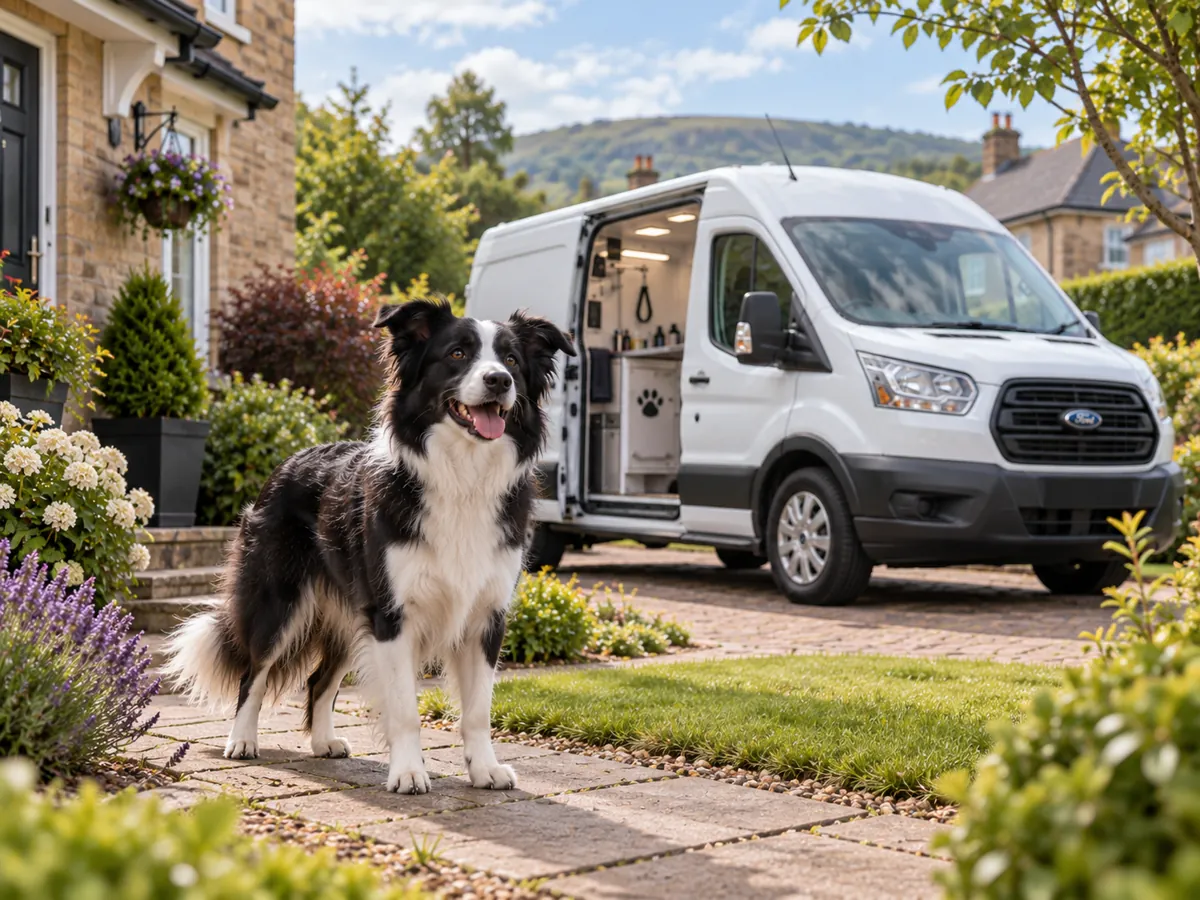
A thorough de-shed on a large dog generates a lot of hair and takes a lot of drying — and all of it happens in the van rather than in your house. No transporting a heavily shedding dog in the car, no vacuuming the boot afterwards, and no half-day lost to a salon trip. See our guide on mobile grooming for large and giant breeds.
FAQs
Helpful pages: